
帕拉泰克斯
帕拉泰克斯(Paratext)由圣经翻译员为圣经翻译员而创立。专门为将圣经翻译成任何书面语言而开发,帕拉泰克斯(Paratext)实现了基于原始文本的持续准确翻译,并以其他语言的高质量翻译为模型。
从研究和草拟,到审核和修订,直至出版,帕拉泰克斯(Paratext)支持将上帝的话语翻译成各地人们的心语。
圣经翻译员需要获取尽可能多的语言的 最佳参考文本。帕拉泰克斯(Paratext)促进了圣经翻译社区内的 共享精神
,邀请出版商将他们的译本 回赠给其他翻译员。这套资源不断增长,目前包含超过 1,270
种语言的模范文本。over 1,270 different languages.
屏幕
感言
"When I showed the Finongan team Enhanced Resources in Paratext 9, they were in awe. They cannot understand why anyone would not want to use Paratext 9."
Chris R, Translation Advisor - Papua New Guinea
"The powerful tools in Paratext significantly increase the quality and speed of our translation work. Praise God for this wonderful program and for all those who invest in developing and supporting it!"
Troy M, Translation Consultant
"This is awesome! We're very very grateful for Paratext. We know it's going to save us years of our life and in our translation!"
Tim S, Translation Advisor - Mexico
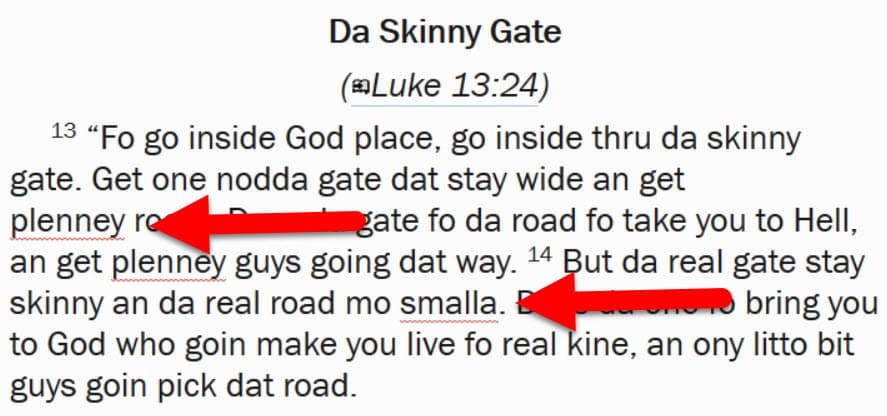
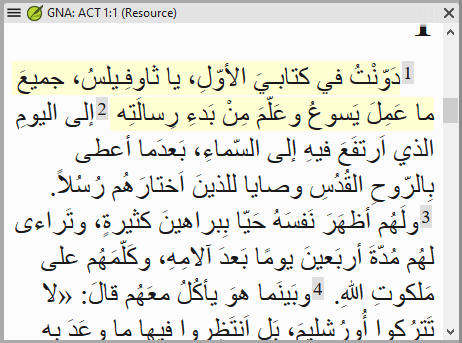
Paratext can be used to translate the Bible into any language, using any writing system, no matter the complexity. Paratext is powerful enough to display and translate any language of the world, including right-to-left and complex scripts. You can find a few examples below, the possibilities are virtually endless!
Using Project Sharing in Paratext, translation team members are empowered to collaborate and continue their ongoing contributions to the translation project, even from remote locations. Project sharing (also called Send/Receive) allows for the seamless synchronization of translation projects between multiple team members, whether they are working side-by-side in the village or remotely in different countries.
Paratext offers a large collection of translation resources (Bibles, handbooks, and other resources) from the Digital Bible Library for vetted translators!
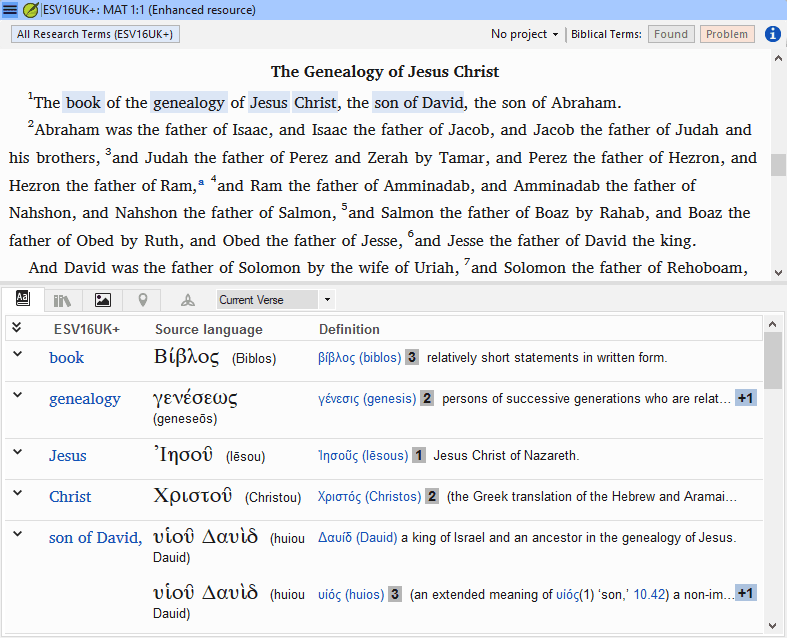
Enhanced Resources are Bible translations that contain links to key terms and phrases in the original Greek or Hebrew text. These key terms link to dictionaries, encyclopedia articles, images, and media that provide information about the language, culture, or other aspects of the text. Enhanced Resources currently exist for English, French, Spanish, Portuguese, Chinese, and Tok Pisin, and more languages are being added.
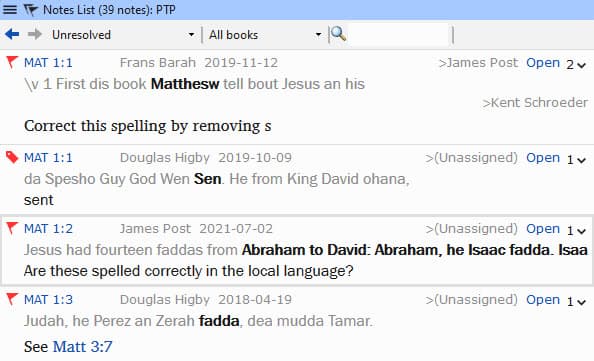
Send reminders, comments, or questions to other members of your team so you can work together more effectively. Translation Notes (also called Project Notes) record reminders, comments, questions, and answers which relate to a translation over the course of the project. These notes are usually discussions between team members such as consultants and translators. Notes can be attached to a specific words or phrases in the text, can be assigned to specific project members, and tracked by status (resolved or unresolved). Unlike footnotes, project notes are not included in the published translation.
The Biblical Terms tool helps translate key biblical terms like salvation, sanctification, and redemption accurately and consistently throughout the whole Bible.
The Wordlist tool is used to create a custom dictionary for all of the words in your translation text. This dictionary helps ensure spelling is consistent and accurate for the whole translation project. It can help you to more accurately and efficiently identify words which are most likely misspelled, as well as perform a variety of other word level or orthography checks.
Paratext checking tools find missing or invalid chapter/verse numbers, characters, punctuation, quotations, scripture references, and much more! Paratext's checking tools quickly identify many types of problems in the translated text, flagging them so that translators can locate and fix them before publishing.
Use the power of Paratext to create a customized interlinear text between any two languages. The custom interlinear tool (also called the Project Interlinearizer) displays the translation text for the current verse, together with glosses in another language. Paratext uses its understanding of Scripture and language structure to create a statistically-guessed gloss, and learns as the translator glosses more and more text.
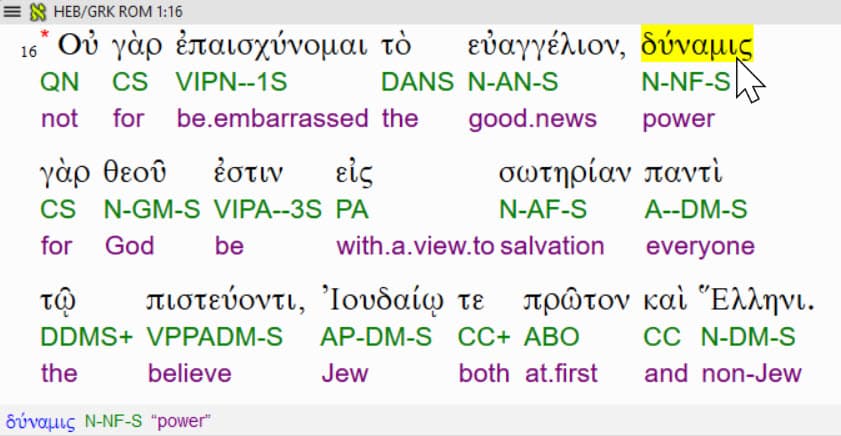
Use the powerful Source Language Tools to analyze and study Greek and Hebrew texts, interlinears, lexicons, and dictionaries. The Source Language Tool (SLT) window provides a way of working with the Hebrew and Greek source language texts alongside other text windows. You can easily view a source language text along with an interlinear gloss and an interlinear morphological analysis of the words.