
WeSay
WeSay giúp những người không phải là nhà ngôn ngữ học xây dựng từ điển trong ngôn ngữ của họ. Nó có nhiều cách để giúp người bản xứ nghĩ về từ trong ngôn ngữ của họ và nhập một số dữ liệu cơ bản về chúng. Chương trình có thể tùy chỉnh và định hướng nhiệm vụ, cho phép cố vấn bật/tắt nhiệm vụ khi cần và khi người dùng nhận được đào tạo cho các nhiệm vụ đó.
WeSay sử dụng định dạng XML tiêu chuẩn và có thể trao đổi tự động với công cụ định hướng ngôn ngữ học của chúng tôi như Fieldworks Language Explorer (FLEx). Người dùng có thể cộng tác qua ổ USB, email và kết nối mạng.
Màn hình
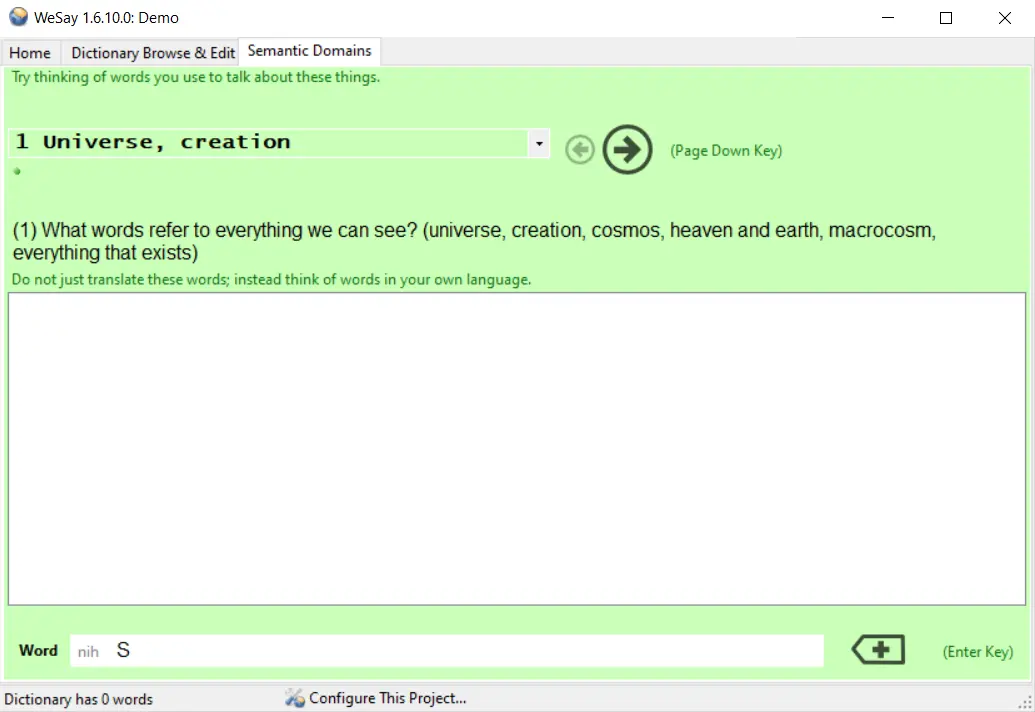
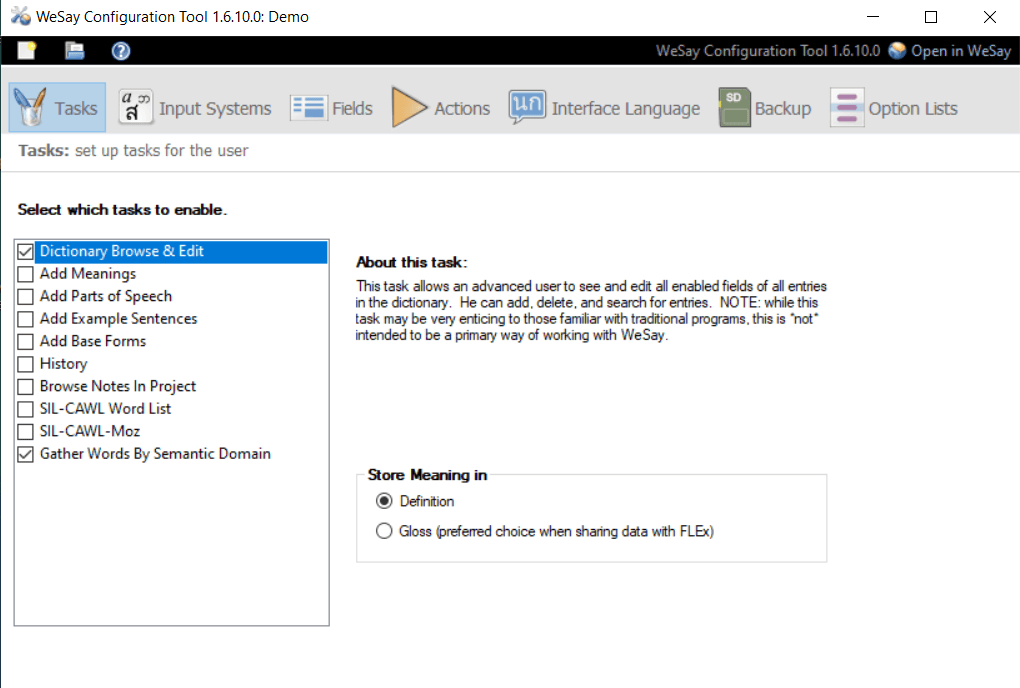
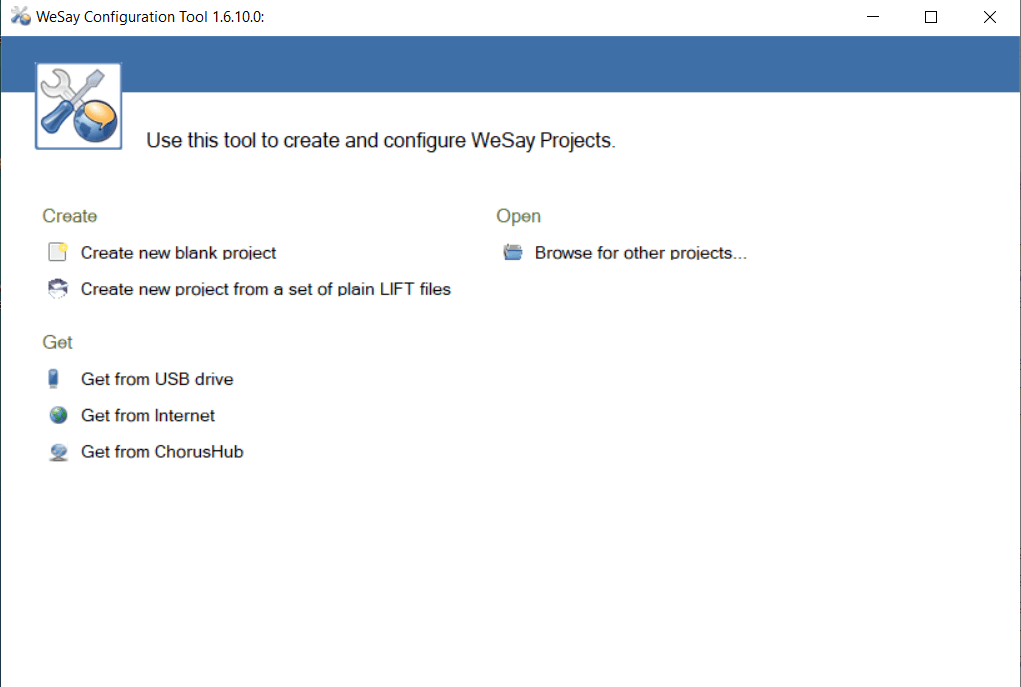
Around the world, speakers of lesser-known languages are eager to develop their own languages. Part of that development will mean collecting stories for publication and developing dictionaries. In many cases, they are limited to working without the help of a computer. This is a difficult environment for computer use, as there is often:
- No previous computer exposure
- No local computer training or maintenance
- Limited electricity
- Limited or non-existent connection to the internet
- Dusty, wet, hot, humid conditions
WeSay is an Open Source project aimed at providing computer tools to help communities perform several language development activities on their own. The project develops tools that are simple, task-oriented, and available on hardware appropriate to the environment. At the same time, these tools enable data sharing with advisors running more traditional, high-powered linguistic and publishing software. The idea is to empower communities to do their own high-quality data gathering, leaving the more technical aspects of publishing to more traditional platforms.
WeSay will be of interest in those situations where native speakers are ready to play a direct, ongoing role in the construction of a dictionary and collection/transcription of stories in their own language, using something other than paper.
WeSay has various ways to help native speakers to think of words in their language and enter some basic data (no backslash codes, just forms to fill in). They can make local, simple printouts for local use, checking, and peer review. The program supports the sharing of gathered words via USB key or email (where available).