AiBT-AI Bible Translation
Community-Centric Multi-Domain Translation Approach
AiBT (AI Bible Translation) follows a community-centric approach in which mother-tongue translators are at the center of the system. Translators are not only the primary users of the system but also actively participate in its development and continuous improvement.
AiBT is designed to address the lack of accessible, culturally relevant content by supporting the translation of the Bible, Scripture engagement materials, and other community-interest resources into languages that local communities can understand and use. It can begin with whatever corpus is available at the time—substantial, partial, minimal, or none at all—and build forward from the stage the language project has already reached. As translation work progresses, the system learns from validated translations, corrections, and translator feedback, progressively strengthening its language model and translation capability.
The system can then be developed toward multi-domain capability, enabling the same language technology to support not only Scripture translation but also Bible-related, teaching, devotional, and broader community-relevant content. This allows the investment made in developing translation capability for a language to serve a wider range of community needs.
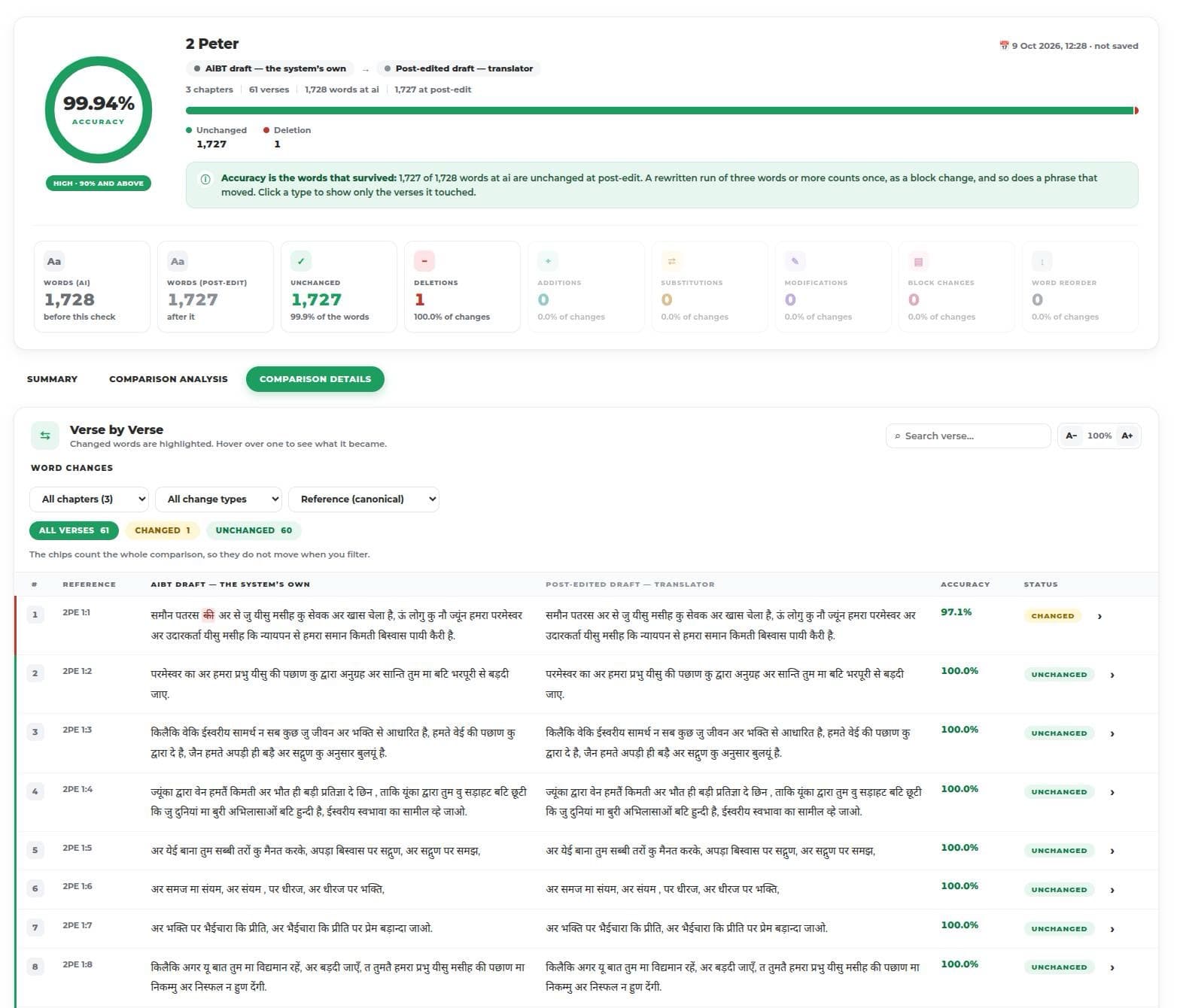
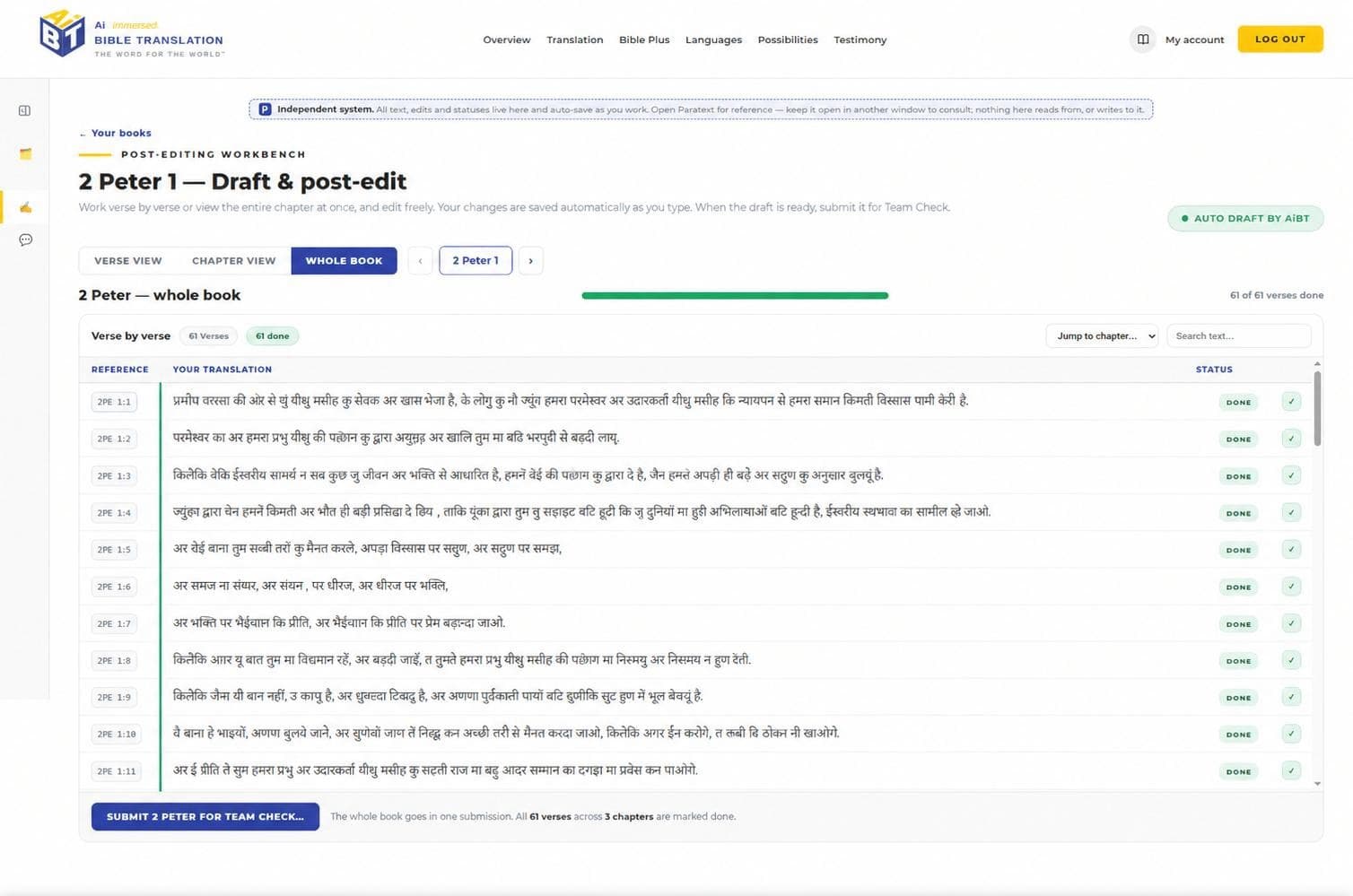
AiBT provides a simple and accessible interface where users can log in, enter text, select the target language, and generate a translation draft. This draft can then be reviewed, edited, and validated by mother-tongue translators and community members.
By combining rule-based methods, statistical machine translation, and neural-network-based elements where appropriate to the available corpus, AiBT can continuously improve its translation suggestions as more validated translations and corrections become available. This creates a collaborative learning cycle in which every validated translation contributes to improving future translation predictions.
The community is therefore an integral part of the system rather than simply the end user. Translators and language communities provide linguistic knowledge, feedback, corrections, and validation, while AiBT uses these inputs to progressively improve translation quality. As accuracy increases, the amount of time required for manual drafting and correction can decrease, enabling translators to produce more content while maintaining human validation, quality, and community ownership.
In this way, AiBT places the mother-tongue translator at the center while providing a flexible translation platform that can work with languages at different stages of corpus development. It combines AI with human expertise, learns continuously from validated community input, and builds toward sustainable, multi-domain translation capability for Scripture and the wider content needs of the language community.
Screens